About Temba

A life in chapters, not headlines

From a farmhouse in the Rolwaling Valley to the summit of the world's highest mountain, and everything that has followed since.

01

Early life

Temba was born on 9 May 1985 in Tashi Nam, in Gaurishankar, Dolakha district — a remote corner of Nepal roughly 300 kilometres from Kathmandu, reachable only by a full day’s bus ride followed by two days on foot.

He was the second child of Chhauwa Sherpa, who worked as an expedition cook and porter, and Lakpa Diki Sherpa, who kept the household and the fields. Alongside his brothers, Ningma Tsering and Nima Naru, Temba spent his mornings tending cattle and collecting firewood before the hour-long walk to school.

The family’s life followed the seasons: summers spent high in the mountains during the trekking season, winters spent in lower villages once farming and trekking both became impossible.

Early life
02

Education

In 1998, the family’s growing ties to Kathmandu — where his father was also finding steadier work — brought Temba to the capital, where he joined Pashupati Mitra Secondary School.

At thirteen, his pull toward the mountains led him to a basic mountaineering course at the Nepal Mountaineering Association, making him its youngest certified graduate. By then he had already trekked widely with his father and uncles, including ascents of two peaks above 6,000 metres.

Recognizing his talent, Siddhartha Vanasthali School in Kathmandu — under principal Laxman Rajbhanshi — offered him a full scholarship with accommodation, where he completed his schooling.

Education
03

The first Everest attempt

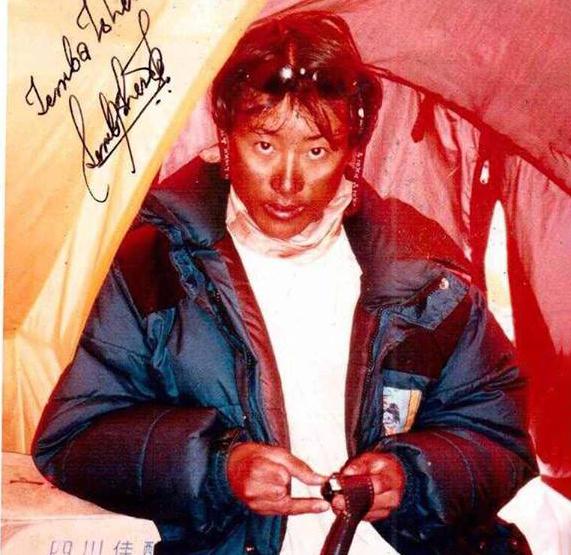
In April 2000, Temba’s team set out from Kathmandu for Everest’s South Side with a modest, self-funded budget. Nearly two months of trekking and acclimatizing later, dwindling food and oxygen forced the decision to push for the summit.

Three nights at Camp 4 — 7,925 metres, in the Death Zone — had already taken a toll. Reaching the Hillary Step after eleven hours of climbing, Temba had lost all feeling in his fingers. Depleted oxygen and worsening weather forced the team to turn back twenty-two metres from the top.

He returned to Kathmandu with severe frostbite; doctors amputated three fingers on his right hand and two on his left.

The first Everest attempt
04

The return

Two weeks after his sixteenth birthday, Temba went back — this time via the North Ridge in Tibet, with a more experienced and better-resourced team. He has credited Thamserku Trekking and climbing partner Sonam Sherpa with making the second attempt possible.

In the early hours of 23 May 2001, under a clear sky, he reached the summit. The Government of Nepal and Guinness World Records recognized him as the youngest person ever to climb Mount Everest — a record that, since Nepal now bars climbers under sixteen, remains unbroken within the country. The wider Guinness title was later surpassed by Jordan Romero, who summited from Tibet at age thirteen in 2010.

Before his first expedition, Temba had met King Birendra of Nepal, who told him not to push himself too hard and that they would meet again. The King and much of the royal family were killed in the palace massacre of 1 June 2001 — just days after Temba’s own summit.

The return
05

Life in China

His Everest achievement earned Temba a scholarship from the Chinese government to pursue undergraduate study — an opportunity again supported by his old principal, Laxman Rajbhanshi.

He enrolled at Wuhan University to study Business Administration. The adjustment was difficult at first — within a couple of months of arriving, homesickness sent him back to Nepal, until his principal insisted he return and finish what he’d started.

Over four years, he learned Mandarin, built friendships, and grew comfortable far from home — all while his passion for the mountains never faded. He is fluent in Nepali, Chinese, English and Hindi.

Life in China
06

2015

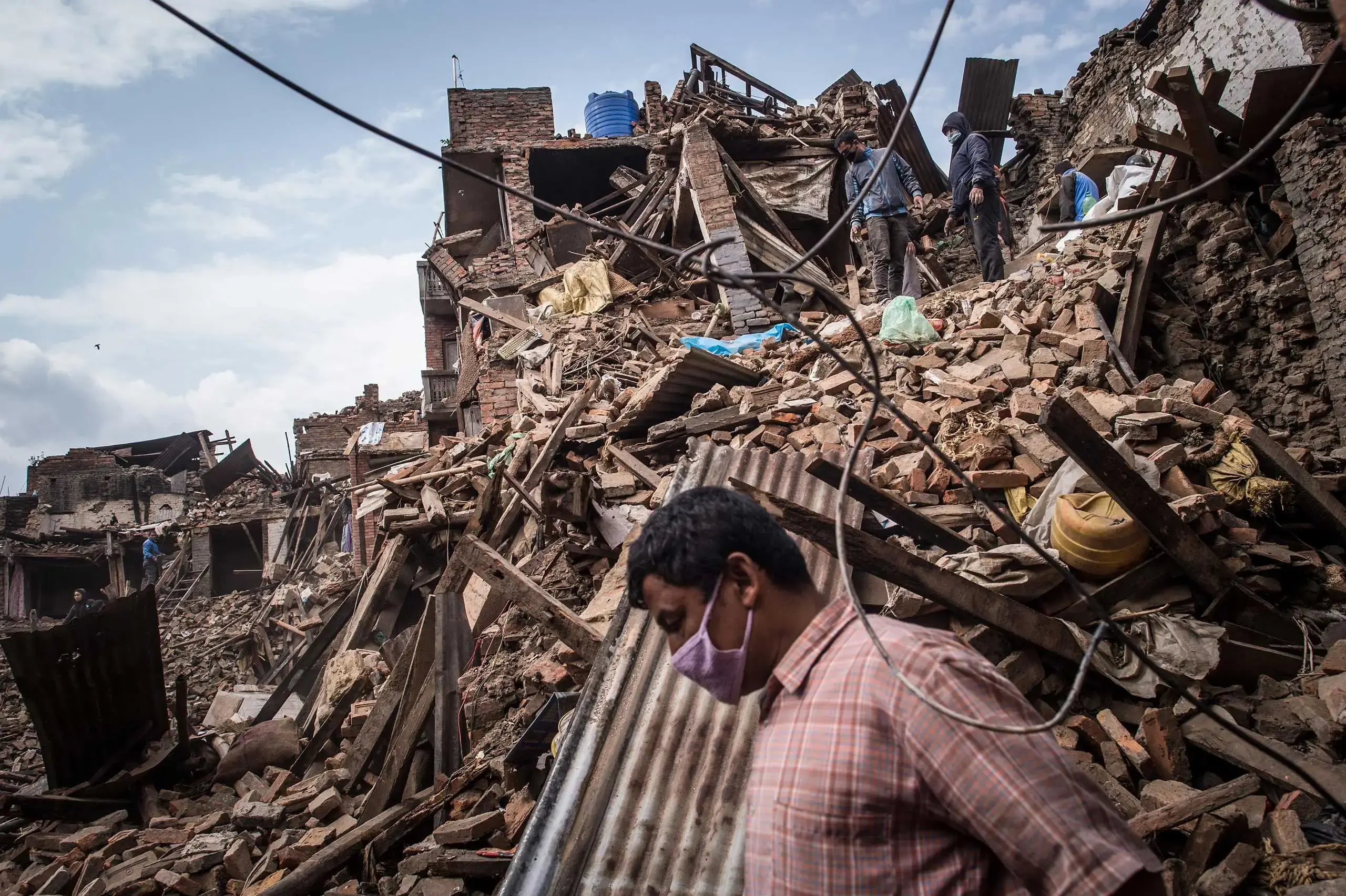
By 2015, Temba was managing director of Dreamers Destination, a Kathmandu-based expedition operator. He was preparing to guide a large Everest group, including the first Chinese women’s Everest expedition — seventy climbers and staff in total — when the 7.6-magnitude earthquake struck.

The quake triggered a massive avalanche off Pumori that tore through Everest Base Camp. Temba lost contact with his team and, for a time, with his own parents back in Dolakha. Several members of the wider expedition community did not survive.

The disaster was compounded later that year by an economically devastating blockade at Nepal’s southern border, which further strained the tourism industry Temba’s livelihood depended on.

2015
07

Entrepreneurship

In 2015, Temba left Dreamers Destination to found Sherpa Khangri Outdoor, a Kathmandu-based trekking and expedition agency organizing climbs above 8,000 metres, in Nepal and abroad. He has spoken about wanting Sherpas — long the backbone of the Everest industry — to run their own guiding companies rather than work as employees of foreign-owned operators.

His work has taken him well beyond Nepal — to China, across Africa, and to Iceland, France, the UK, the US, Japan, Korea, Singapore, Malaysia and Bangladesh, among other countries.

Entrepreneurship
08

Still with the mountains

Alongside running his company, Temba is working through the Seven Summits — the highest peaks on each continent. He has already reached the summits of Kilimanjaro in Africa, Elbrus in Europe and Denali in North America, in addition to Everest in Asia.

As a Sherpa, his connection to the Himalayas runs deeper than sport — mountains, in his telling, are worshipped, not conquered, and climbing them offers a rare, hard-earned sense of achievement.

Today, his focus has widened from personal ascent to shared experience: helping others discover the Himalayas he was born into, one expedition at a time.

Still with the mountains
Since 2015

Rebuilding, year by year

2015
The dark side of 2015

The dark side of 2015

Beyond the earthquake itself, the Nepal blockade that followed in September 2015 choked fuel, medicine and relief supplies for months — compounding a humanitarian and economic crisis that took years to recover from.

2016
A slow return

A slow return

A Chinese film crew joined an Everest trek, and seven groups of independent and guided trekkers returned to the Everest and Annapurna regions that autumn — early signs of tourism reviving.

2017
Manaslu and Everest

Manaslu and Everest

Temba personally led operations at Everest Base Camp while his team ran a successful Manaslu expedition alongside it.

2018
Everest, Annapurna, Langtang, Dolpo

Everest, Annapurna, Langtang, Dolpo

A spring Everest expedition was followed by treks across Annapurna Base Camp via Poon Hill, Langtang and Gosaikunda, and the remote Upper Dolpo region in autumn.

2019
A full season

A full season

Everest via the Three Passes, the Annapurna Circuit, Mardi Himal, the Manaslu Circuit, Upper Mustang, and peak climbs on Island Peak and Lobuche filled the year.

2020–22
The pandemic years

The pandemic years

Days after Nepal launched Visit Nepal 2020, COVID-19 brought global travel to a halt, cancelling bookings and pausing the country's tourism industry for nearly three years.

2023
Back on the trail

Back on the trail

Independent and private guests returned for an Everest trek that April, with fuller marketing plans set in motion for the seasons ahead.